How to teach gratitude to kids (with a gratitude journal)
Simple habits, a gratitude journal and thankful activities that help children appreciate what they have.
Updated 17 October 2026
Grateful children tend to be happier, kinder and more resilient. Gratitude means noticing the good things in life and appreciating the people who help us. Like any skill, it grows with practice. This guide explains how to teach gratitude to kids with simple daily habits, gratitude activities, a gratitude journal for kids and tips for keeping it meaningful rather than forced.
Why gratitude matters
When children practise gratitude, they focus more on what they have than what they do not. Research on adults and older children links gratitude with better mood, better sleep and stronger relationships. For young children, gratitude also builds empathy, because thanking someone means noticing what they did for you.
How to teach gratitude: daily habits
Model it
Children learn most from watching adults. Say what you are grateful for out loud: "I'm so thankful the sun came out for our walk." Thank your children too: "Thank you for helping me carry the shopping."
Share three good things
At dinner or bedtime, each person shares three good things from the day. They can be big or small: a fun game, a tasty lunch, a hug from grandma.
Say thank you and explain why
Encourage children to say thank you with a reason: "Thank you for the book. I love dinosaurs." Explaining why makes gratitude more thoughtful.
Notice small things
Point out everyday good things: a beautiful sunset, a friendly neighbor, a cozy blanket. Gratitude is about noticing.
Talk about helpers
Talk about the people who help us every day: teachers, bus drivers, doctors, farmers and cleaners. Who makes our lives easier?
A gratitude journal for kids
A gratitude journal is a simple, powerful habit.
- Choose a notebook. Let children decorate the cover with stickers or drawings.
- Pick a time. Bedtime works well for most families.
- Draw or write one thing. Younger children draw a picture; older children write a sentence or three things.
- Use prompts. If they get stuck, use one of the prompts below.
- Look back. Every few weeks, read old pages together. It is lovely to remember good days.
Prompts for a gratitude journal:
- Someone who made me smile today
- Something I learned today
- A food I am thankful for
- A place I love
- Something that made me laugh
- A friend I am grateful for
Keep it short and pressure-free. Even one line or one drawing counts.
Gratitude activities for kids
- Gratitude jar. Write or draw things you are thankful for on slips of paper and put them in a jar. Read them together at the end of the month or the year.
- Thankful tree. Draw or build a bare tree. Add paper leaves with things you are grateful for. It is a lovely Thanksgiving tradition. See Thanksgiving crafts for kids.
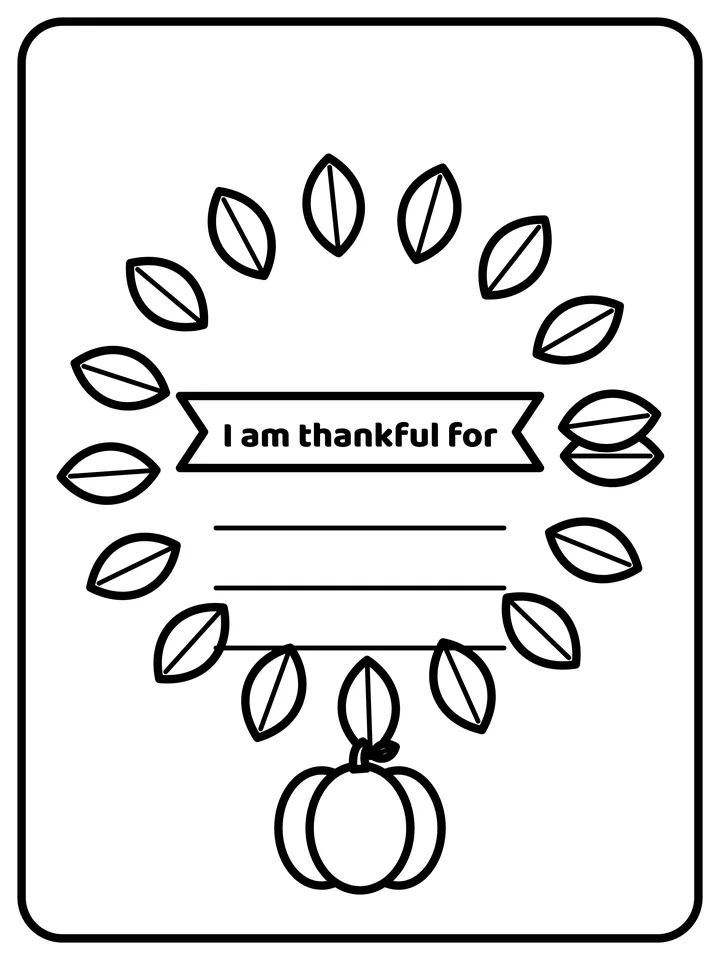
- Thankful wreath. Color the thankful leaf wreath page and write a thankful word on each leaf.
- Thank-you notes. Make cards for teachers, neighbors, grandparents and community helpers. Color a heart page or flower page for the front.
- Gratitude walk. On a walk, take turns naming things you are thankful for that you can see.
- Gratitude alphabet. Think of something you are grateful for that starts with each letter of the alphabet.
- Thankful photo album. Take photos of things you are thankful for and make a small album.
- Donating. Choose toys, books or clothes to give to children who need them.
- Gratitude circle. Sit in a circle and share one thing you are thankful for about the person next to you.
- Thank a helper. Bake cookies or draw a picture for a mail carrier, garbage collector or school cleaner.
Gratitude at different ages
Toddlers (ages 2 to 3)
Model thank you and talk simply about what you like: "I love our cozy blanket." Toddlers can draw a picture of something they love.
Preschoolers (ages 3 to 5)
Three good things at bedtime, a gratitude jar with drawings, thank-you cards and simple thankful trees.
School age (ages 6 to 12)
Gratitude journals with written entries, thank-you letters, volunteering, donating toys and talking about how gratitude feels.
Keeping gratitude meaningful
Forced thank yous do not build real gratitude. Instead:
- Keep it light and positive, not a lecture.
- Accept small or silly answers; "I'm thankful for pizza" is a fine start.
- Make it a habit, not a punishment.
- Join in yourself every time.
- Notice and praise genuine thankfulness.
Gratitude in the classroom
Teachers can start or end the day with a gratitude circle, keep a class gratitude jar, write thank-you notes to school staff and make a gratitude display in November. Gratitude also connects with kindness; see how to teach kids kindness.
Gratitude and mindfulness
Gratitude is a natural part of mindfulness: both are about noticing the present moment. See mindfulness activities for kids for calming activities that pair well with gratitude.
Gratitude when things are hard
Gratitude does not mean pretending everything is fine. When children are sad or upset, acknowledge their feelings first. Later, when they feel calmer, you can gently look for small good things together, such as a friend who helped or a cozy bedtime story. This teaches children that hard days and good things can exist side by side, which is an important part of resilience.
Gratitude through the year
Gratitude is often linked to Thanksgiving, but it works best all year. Try a gratitude jar in January, thank-you cards for teachers at the end of the school year, a summer gratitude walk and a thankful tree in November.
Frequently asked questions
How do I teach my child to be grateful?
Model gratitude yourself, share three good things each day, encourage thank yous with a reason, keep a gratitude jar or journal and talk about the people who help us.
What should kids write in a gratitude journal?
One thing or three things they are thankful for each day. Prompts like "someone who made me smile" or "something that made me laugh" help them get started.
What age can children start a gratitude journal?
Children as young as three or four can draw one thing they are thankful for. Writing usually starts around age five to seven.