How to teach a child the alphabet: 10 playful ideas
Songs, letter hunts, tracing and games: ten playful ways to teach the alphabet at home.
Updated 18 October 2026
Learning the alphabet is the foundation for reading and writing. Children need to know each letter's shape, name and sound, and they learn best through play, repetition and lots of fun. This guide explains when to start, which order to teach letters, how to teach phonics, and 10 playful ideas for teaching the alphabet at home or in the classroom.
When should children learn the alphabet?
Many children start recognizing letters between ages two and four, often starting with the letters in their own name. Most children learn all their letters and sounds between ages four and six, in preschool, Pre-K, reception or kindergarten. Every child is different, so follow your child's interest and keep it fun.
Letter names or letter sounds?
Both matter. The letter name helps children talk about letters ("that's a B"), while the letter sound helps them read and write ("b says buh"). Many teachers focus on sounds first, because sounds are what children use to read words. You can teach both together: "This is B. B says buh, like ball."
Which order should letters be taught?
There is no single right order. Some popular approaches:
- Letters in their name first. Children are motivated by their own name.
- Phonics order. Many phonics programs start with s, a, t, p, i, n, because these make lots of simple words, such as sat, pin, tap and nap. Then m, d, g, o, c, k, and so on.
- Alphabetical order. One letter a week from A to Z, which works well for letter-of-the-week routines.
Whatever order you choose, review earlier letters often.
Capitals or lowercase first?
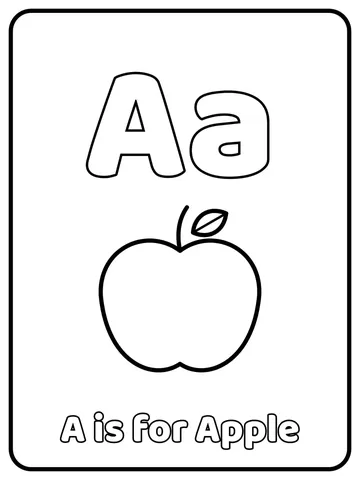
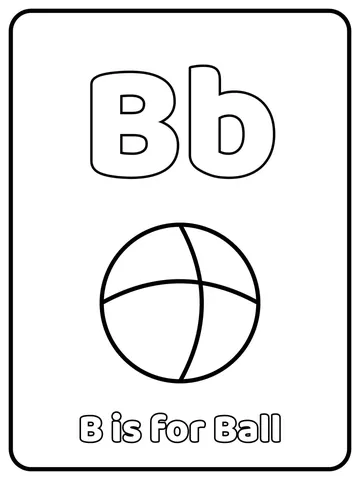
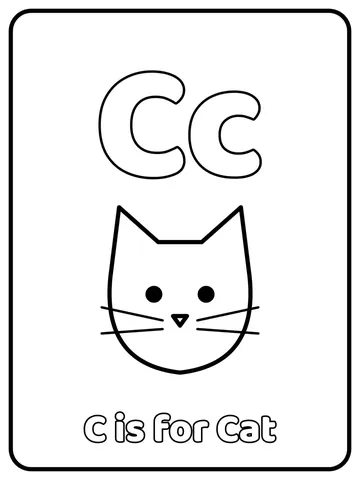
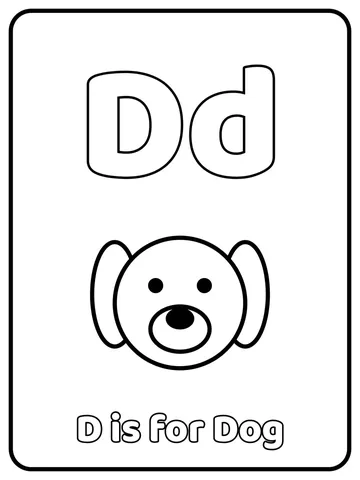
Most books use lowercase letters, so many teachers start there, or teach both together. Our alphabet coloring pages show both capital and lowercase letters with a picture.
10 playful ideas to teach the alphabet
- Sing the alphabet song. Point to letters on a chart as you sing, so children connect the song to the shapes.
- Teach the sounds. Say each letter's sound with an action: "a, a, ant" while your fingers crawl up your arm.
- Start with their name. Write your child's name and find those letters in books, signs and packaging.
- Color a letter a day. Color a big bubble letter from our alphabet coloring pages and talk about words that start with it.
- Trace letters. Trace with a finger, then a crayon, using our letter tracing worksheets. The name tracing tool makes a sheet for any name.
- Go on a letter hunt. Pick a letter and find five things in the house that start with its sound.
- Make letters from play dough. Roll snakes and shape them into letters.
- Write letters in sand or shaving foam. A tray of sand, salt or shaving foam makes practice feel like play.
- Play I spy with sounds. "I spy something beginning with mmm."
- Use a find-the-letter grid. Circle all the letters that match, like on our letter recognition worksheets.
A simple letter-of-the-week routine
Many families and teachers enjoy focusing on one letter a week. Here is a simple plan:
- Monday: introduce the letter, its name and sound. Color the letter page.
- Tuesday: trace the letter and practise writing it.
- Wednesday: go on a letter hunt around the house.
- Thursday: read a book with lots of words starting with the letter.
- Friday: make a craft, such as an apple stamp for A or a paper bee for B.
Each letter has its own sheet set on our site, from letter A worksheets to letter Z worksheets, with a tracing sheet, a find-the-letter sheet and a words sheet.
How to teach phonics
Phonics is the link between letters and sounds. Once children know some letter sounds, they can start blending them into words.
- Teach a few sounds. Start with s, a, t, p, i, n.
- Blend. Say the sounds slowly, then faster: s-a-t, sat.
- Read simple words. CVC words like cat, dog, sun. Try the CVC words worksheets.
- Add more sounds. Then digraphs like sh, ch, th. See phonics worksheets.
- Read books. Decodable books use only the sounds children know.
For the full journey from letters to books, see how to teach a child to read.
Tricky letters
Some letters are easy to mix up:
- b and d. Make the word "bed" with your fists: the left fist with the thumb up is b, the right is d.
- p and q. Practise them separately on different days.
- m and w, n and u. Notice which way they face.
Mixing up letters is completely normal at this age and usually fades with practice.
Teaching the alphabet to different ages
Toddlers (ages 2 to 3)
Sing songs, read alphabet books, play with foam letters in the bath and point out letters in everyday life. No pressure, just exposure and fun.
Preschoolers (ages 3 to 5)
Learn letter names and sounds, trace letters, play sound games and start blending simple words.
Kindergarten (ages 5 to 6)
Write all letters, read CVC words, learn sight words and begin reading simple books. Our kindergarten worksheets cover these skills.
Keep it short and fun
Five to ten minutes a day is enough for preschoolers. Stop while your child is still having fun, and celebrate every new letter they learn.
Alphabet activities for the classroom
Teachers can make letters part of every day. Display a big alphabet chart at children's eye level, hold a "letter of the day" in morning meeting and keep a basket of objects that start with that letter. Line up by first letters of names, sing alphabet songs during transitions and keep alphabet tracing sheets in a basket for early finishers. Small, frequent exposure helps every child, including those who need a little more time.
Frequently asked questions
How long does it take a child to learn the alphabet?
It varies. Many children learn all letters over a year or two between ages three and five. Learning one letter a week takes about six months.
Should I teach uppercase or lowercase letters first?
Many teachers start with lowercase because most books use it, or teach both at the same time. Capitals are easier to write, so some children learn them first.
What is the best way to teach letter sounds?
Use short, playful activities with actions, songs, pictures and games. Connect each sound to a word and an object, and review often.